


BLACK AND WHITE IS ALL YOU SEE
There was a time when wearing bright pink was not considered a fashion crime but a statement. The time when the cars had more personality and were more suave than what we see today, and the streets looked more illuminated and cheery, rather than the dull, gloomy roads we see now.
When did humanity leave behind the radiant and luminous colours for the monochrome ‘aesthetic’ we see today? When did fashion industries, automobile industries, and film industries swap out vibrancy for something that is sterile and has no characteristics?
A monochromatic world

Fashion shifted to more neutral colours, as those colours were easier to mix and match and wear, increasing practicality. Minimalist trends emerged, which were reflected in fashion choices, a very small audience remained, which gravitated towards bold colours, leading to reduced production of bright-coloured clothes. With the rise of ‘quiet luxury,’ people aimed at imitating the luxurious look, causing a transition in colour palettes.
Car production nowadays is limited to grey, white or black colours as mass-produced colours are significantly cheaper than sourcing pigments, and buyers often avoid bold colours, fearing a dated look and lower resale values.
The logos of apps and brands, which were quirky and fun with myriads of colours, had an individual identity and are lost now because brands are adopting minimalism to adapt to the digital age, where brands' main motive is to be recognisable on small, low-resolution screens like mobile apps and browsers. This shift, called ‘debranding, ’ reduces complex imagery to flat, monotonic designs.
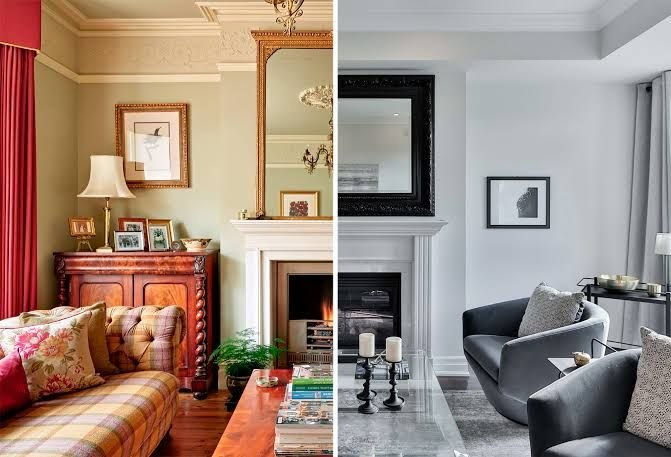
The vibrant streets comprising buildings with splashes of red, blue, orange, green and any quirky colour created a harmony without losing its individuality. It created a sense of serenity among the onlookers. All of it is now influenced by ‘Modernism’, which rejected decorative elements and embraced minimalism. Grey, concrete, steel and glass became the forefront of progress. The face of the ‘modern city’ became high-rising skyscrapers, minimalist homes, neutral-toned furniture, so the whole world followed suit.
In modern cinema, directors are adopting overly muted or graded styles in pursuit of realism. The blockbuster movies that are well appreciated among film critics usually adopt desaturated colour palettes and darker lighting, so the audience started associating muted colours with artistic sophistication, and studios started adopting this theme. Older cameras tended to capture warmer and more saturated shots, but with digital cameras, results were flatter and neutral, as they were meant to be graded and edited later.
The old McDonald’s stores with their characteristic red and yellow tones got replaced as they worked to cater to adults, coffee drinkers and customers looking for a fast meal rather than kids, so to cater to their preference, subdued buildings took over. Their competition also started adopting minimalism, which led them to make changes to stay relevant.
The psychological impact
Vibrant hues like yellow and red are highly stimulating and linked to happiness, joy, and serenity. The removal of these hues has led to a loss of mood-enhancing cues. On the other hand, neutral colours are associated with a lack of stimulation, setting a depressive, empty or lethargic environment.

Fashion was used to make bold statements. It was a channel for self-expression, but with the rise of neutral colours, the clothes became identical, leading to a sheep mentality among the people. A person who dresses differently is often shunned or develops low self-esteem.
Colours play a role in memory and cultural identity. People associate specific areas and memories with colours; losing this causes a loss of diversity and decreases the scope for creativity. It leads to a world where everything looks the same with no individuality to set places apart.
Role of social media
With the rise of pop culture, monochromatic aesthetics became mainstream. It is an age-old tale that people imitate their favorite singers, actors, performers and influencers who were more inclined towards minimalism and neutral tones. Muted tones became synonymous with success, wealth, sophistication and modernity.
The rise of social media accelerated this process; the trends that were earlier localised were now globalized. With greater reach, the influence grew worldwide. Online creators adopted modern styles as the algorithm pushed this content more to become relevant. The emerging creators started copying the original ones as they were proven to be successful.
The influence of social media is present everywhere, from the clothes we wear, the technology we use, the food or drinks we consume, everything is curated to stay in touch with trends.
Businesses also hopped onto trends and produced products that were in style or famous.
Businesses prioritised mass production to decrease production costs, which led to fewer colour options in every aspect of our lives.
What’s in store for the future?
The days where self-expression was prominent in personal belongings, where every little item had a story, an emotion linked to it, are long gone.

Colour did not disappear because society collectively rejected it. Rather, it became a casualty of optimisation. In a world driven by scalability, efficiency, algorithms, and mass appeal, uniqueness is often treated as a commercial risk.
This loss is not just visual, but cultural. Though the movies were black-and-white, the world was vibrant. It is the representation of loss of art and culture leading to a mind-numbing ‘copy-paste’ era where everything looks the same, and feels synthetic. The houses that carry stories, where every item is cherished for its own significance, are losing their identity and becoming akin to hotels, thereby losing their cultural heritage.
If we don’t take an initiative to change our ways, we stand to lose our creativity, individuality, identity, and heritage.


Comments