


Irrfan Khan: The Man Who Taught a Generation to Slow Down
""The day I become conventional, something inside me will die."
Introduction
Some Souls announce themselves with a thunderous demand for the world’s attention. Others slip in quietly as the last golden glow of evening slips through an open window. They don't ask for anything, they don't seek applause, but they leave a void so deep, that time itself finds it hard to fill it.
One such soul was Irrfan Khan.
He never sought the spotlight, never searched for fame, never tried to become larger than life. But with a look, a pause, a half-smile, he made millions of people feel seen in their loneliness, understood in their sorrow and comforted in their humanity.
His absence still weighs heavy – not in the cinema halls but in the hushed corners of our lives where his characters continue to live.
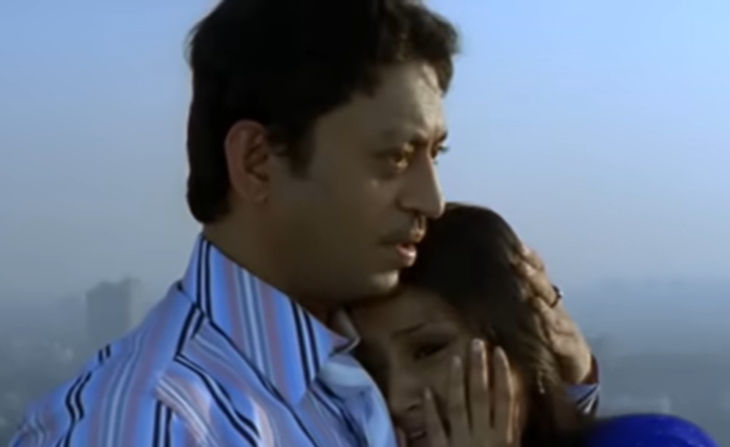
The long wait before the world knew his Name
Sahabzade Irfan Ali Khan was born on 7 January 1967, in Jaipur, Rajasthan. He did not enter the film industry with privilege, connections or a famous surname. He arrived with no more than talent, stubborn belief in his craft and determination.
He graduated from the National School of Drama and then shifted to Mumbai with the aim of becoming an actor. But success did not await him; instead, years of rejection. He was not easy for producers to visualize as a conventional Bollywood hero. He had no glamour, no lineage, no industry backing that often opened doors for others.
To keep himself afloat, Irrfan did television serials like Chanakya, Bharat Ek Khoj and Banegi Apni Baat.The job paid the bills but that bigger dream was still frustratingly out of reach. While many of his peers found recognition, Irrfan remained on the periphery for almost a decade, attending auditions and taking small roles that rarely threw him into the limelight.
His first major breakthrough came in the form of acclaimed films like The Warrior (2001) and later Maqbool (2003), a film adaptation of Shakespeare’s Macbeth by Vishal Bhardwaj. For the first time audiences and critics started to notice what the industry had long been ignoring.
Here was an actor that could communicate worlds through silence.
Haasil, Rog and The Namesake were some of the films that brought him more recognition. But Paan Singh Tomar (2012) was what turned him into a national sensation. His performance as the athlete-turned-rebel won him the National Film Award for Best Actor and cemented his position as one of the finest actors of his generation.
But perhaps the most surprising part of his journey was not the success. It was the time it needed.
Irrfan lived in the interregnum of aspiration and accomplishment for almost two decades. He survived obscurity, rejection, disappointment and self-doubt without letting any of it diminish his love of acting.
And when the world did finally applaud him it was not in celebration of some overnight sensation. It was witnessing perseverance, patience and faith triumphant.
He was never destined to become a conventional star,
He was destined to become something far rarer: An artist whose work would outlive him.
The Characters That Spoke to Our Souls
Saajan Fernandes – The Lunchbox (2013)
Saajan Fernandes was a man who had quietly resigned himself to loneliness. Life went on, a silence routine, long after his wife had died, without expectation, without excitement.
Then there came Ila. Not in person but in letters tucked in a lunchbox that was mistakenly delivered to him.
It started as a mistake but slowly turned into the most important relationship of his life. Through those letters, Saajan found pieces of himself he’d forgotten. He opened his heart to a young colleague he had dismissed, went to his wedding from the groom's side, though he was no more than a friend, and slowly began to accept life again.
But what makes Saajan memorable is his selflessness. He never tried to own Ila or to claim a future from her. What he gave was understanding and companionship and a rare unselfish kind of love.
In a world where love is often mistaken for ownership, Saajan taught us that the purest form of love sometimes is just wishing someone happiness even if it doesn't include you.

Paan Singh Tomar – Paan Singh Tomar (2012)
Paan Singh Tomar was a man of great discipline and dedication before he became a feared rebel in the eyes of the world. He was a soldier in the Indian Army and a national steeplechase champion, and he served his country for years, believing that hard work, loyalty and integrity would eventually be rewarded.
They were, for a time.
The young lad who ran barefoot in the ravines of Chambal later became one of the finest athletes of India. He broke records, won awards, proudly wore his country's colors. The applause for his victories, however, was far more fleeting than the struggles that awaited him at home.
When conflicts arose over ancestral land, Paan Singh turned to the institutions he had worked so hard to establish. He tried to get justice through the law. He went door to door. He petitioned the authorities. He believed in the system.
The system did not respond.
What followed was not the fall of a criminal but the heartbreak of a patriot. A man who once ran for his country, slowly realized the country he loved could not protect the people he loved.
The devastation of the film is in Irrfan’s performance, as he takes us through each step of that transformation. The pride. The frustration. The powerlessness. The slow erosion of hope.

Billu Barber - Billu (2009)
Irrfan Khan’s many unforgettable characters include Billu, a special one for his quiet ordinariness. He is not a hero of history, he is not a man of destiny. He is a humble village barber, working hard to support his family, bearing the invisible burdens of everyday life. His world is a modest one. His ambitions are simple. Yet his dignity is boundless.
But things take a turn when the village finds out that he is childhood friends with a famous Bollywood superstar. For years the man went unnoticed overnight he is the centre of attention. Those who barely knew he was alive are now clamoring to be seen with him, wanting to bask in the shine of another man's notoriety.
This change is ironic and profoundly disturbing.
What is so moving about Billu is that he represents the countless ordinary people whose worth is often not appreciated in a world obsessed with status and spectacle. Irrfan, through him, reminds us that dignity has nothing to do with wealth, influence or public applause. It is born from being true to yourself when the circumstances would have us do otherwise.
The biggest success of Billu is not to befriend a super star. It is his not measuring himself to the fame of others.
And in this era of people trying to be somebody all their lives, there is an extraordinary beauty in being a true, quietly taught to us by Billu.

In a village of star-struck people, Billu quietly proved that dignity shines brighter than fame
Nirmal Kumar – Madaari (2016)
Some losses alter a life. Others divided it into two: before and after. When his son died, life was over for Nirmal Kumar. Everything after that was just survival.
What was supposed to be a fun day out with his child turns into a nightmare when a preventable infrastructural failure kills the boy. In seconds, laughter turns to silence, and a father's world drops away beneath him.
What makes Madaari so deeply moving is that Nirmal is not a great man. He’s not rich, powerful or influential. He is an ordinary father whose son was his greatest joy. And perhaps that is why his pain seems so universal.
Irrfan’s depiction of grief is just brilliant restraint. There are no passionate speeches, no overdone displays of grief. Instead, grief falls silently over him, in tired eyes, in unfinished sentences, in silences louder than words ever could be.
Everything he does, he does out of love. Loss is the engine of every gamble he takes.
And by the end of the film, viewers are left with a painful knowledge:
grief does not go away when justice arrives. It just learns to live with us.

The heavier the shackles at your feet, the higher you wish to fly
Stories over Stardom
Irrfan Khan believed in substance in an industry that thrives on spectacle.
He never seemed interested in being the archetypal star. With fame came awards, and then international recognition, but none of that seemed to influence the decisions he made as an artist. While others sought larger than life characters, Irrfan was drawn to people who felt real – flawed, vulnerable and profoundly human.
His cinema was never centered on heroism. It was built on humanity.
He was interested in common lives and exceptional emotions. Whether it was the conflicted Ashoke Ganguli in The Namesake, the introspective Roohdar in Haider, the eccentric detective in Qarib Qarib Singlle or the emotionally layered Raj Batra in Hindi Medium, Irrfan always picked characters whose struggles reflected the complexities of real life.
Perhaps that was why people believed in him.
The moment you saw Irrfan on screen, he never looked like an actor playing a role, He related to the character.
What is even more remarkable is that he often chose such intimate, understated stories when much larger opportunities were before him.
During a time when Hollywood was beginning to acknowledge his brilliance with films like Life of Pi, The Amazing Spider-Man and Jurassic World, Irrfan could have easily pursued international fame with more aggression. But he always chose stories over scale.
One particularly notable example was his rejection of Christopher Nolan’s Interstellar. That role would have put him in one of Hollywood's most lauded productions. But Irrfan turned down the offer as he was already committed to The Lunchbox and D-Day. Later he said it was one of the toughest decisions of his career but he chose to honor the stories and commitments he’d already committed to.
He was also offered a role in The Martian but opted for Shoojit Sircar's Piku. Again he opted for a quieter, deeply human story rather than international exposure.
That tells us something fundamental about the man:
He was looking for meaning.
Often his best work was in stories which others might have overlooked. He dignified the forgotten, gave voice to the voiceless and emotional depth to lives that mainstream cinema seldom took time to venture into.
Irrfan Khan has been a truthful artist in a world increasingly obsessed with appearances. And that truth is true long after the applause has died away.
And perhaps that was Irrfan Khan's greatest achievement, not becoming unforgettable, but making ordinary human lives impossible to forget.
Awards, Recognition and a Legacy beyond them
Irrfan Khan has been blessed with an illustrious career and has been showered with many awards in recognition of his phenomenal contribution to the cinema.
He won the National Film Award for Best Actor for his performance in Paan Singh Tomar (2012), which is still considered one of the greatest performances in the history of Indian cinema. He also won Filmfare Awards for films such as Haasil, Life in a... Metro, Paan Singh Tomar and Hindi Medium.
He was awarded the Padma Shri, the fourth highest civilian award in India, by the Government of India in 2011 for his immense contribution to the arts.
His work was acclaimed all over the world. From The Namesake and Life of Pi to Jurassic World and Inferno, Irrfan built an international career as one of the few Indian actors whose presence effortlessly transcended cultures and continents.

He belonged to that rare fraternity, His legacy was never limited to awards, accolades or box-office success. It exists in the solitary smile of Saajan Fernandes, in the silent dignity of Billu, in the battered resilience of Paan Singh Tomar, in the unfathomable grief of Nirmal Kumar.
Long after the applause has died down and the curtains have fallen, his characters continue to speak to us — of love, of loss, of hope, of dignity, and of the fragile beauty of being human.
Even after his demise on 29 April 2020, Irrfan Khan lives on. Not through awards, records or accolades, but through the countless hearts he touched with his art. Years have gone by but his characters live on—Ashoke Ganguli is still looking for a home between two worlds. Roohdar still moves through the ruins of loss and revenge. Raj Batra is still a reminder of how ridiculous parents can be to their children. Yogi from Qarib Qarib Single still tells us that life can begin again when we least expect it. As long as people find comfort in stories, meaning in silence and beauty in ordinary lives, Irrfan Khan will never truly be gone.
Description: For those who find beauty in silence, meaning in ordinary lives, and comfort in stories that linger long after the credits roll—this is a tribute to Irrfan Khan, an artist who reminded us that the most profound emotions are often spoken in whispers rather than words.


Comments