


Remembering the Legend of River Phoenix, the tragedy of drug abuse and escaping a religious cult
- anandita gupta
- 1 day ago
- 6 min read

Bizarre indeed! Seems like a potpourri of topics. A few days ago, due to the sheer lack of quality content on Netflix and too time on hand during the vacations, I was watching 'The Buckingham Murders'. Truth be told, I was forced to peel mangoes so that they could be made into pickles, courtesy of my mother. So, I took this as an opportunity to watch something to fulfill my day's worth of dopamine.
I remember watch listing 'The Buckingham Murders' for two reasons: Firstly, I read somewhere that Rishi Sunak has watched it. Secondly, it's got Buckingham in its name. Safe to say, it was not a very satisfying watch. The story was too convoluted, the dialogues underwhelming and Bebo's accent really off. Gosh! What's with this silly attempt at a suburban English accent.
It reminded me of 'Derry Girls' and 'How to go to Heaven from Belfast'. Yes, I fear I might have had too much time on hand this vacation. These shows have predominantly Irish actors and something you should know about the Irish is that they use "wee" a wee too many times. Yet, I absolutely enjoyed it. Loved its humour and how the characters seem real and original without constantly feeling out of place. (I am talking about you DS Bhamra!)
Look, I have nothing against British Indians. In fact, I am quite thankful for their legal reverse-colonization of Great Britain. Today, the near majority of rich people in the UK, come from the Indian diaspora. And this pub-loving country has had a teetotaling Prime Minister of Indian origin. The Indian news outlets and media is actually quite obsessed with the former.
Circling back to the Irish shows, they were broadcast on Channel 4 in Ireland and Northern Ireland of UK. Yes, the United Kingdom does include Northern Ireland. The map attached alongside will help you understand better. Interestingly, people here are allowed to hold passports from both the UK and Ireland. How cool is that! Makes me wonder why India has a single citizenship rule?

Now, before you start attacking me for having such subversive ideas, hear me out first. (This is an issue with a lot of people in this world. They are never ready to listen but always ready to attack. Have they even heard of talk-no-jutsu? It saved the world from "PAIN". This is the second issue of most people, Uncle Colm and I included, that they talk about everything else other than what the person actually wants to know!)
What if Indians were allowed dual citizenship? Then maybe, a lot of these Indian-origin rich people would retain their Indian citizenship, and the government could tax them as well. Maybe then, we would no longer have to pay so many tolls on every highway and the country's debt would also be significantly reduced. This makes me wonder how South Korea and other Asian countries managed to survive the early 2000s IMF crisis and have far surpassed the infrastructure capabilities of India. South Korea is even considered a developed nation. God knows how long will India keep "developing"? At least I would like to live long enough to witness that, for I am quite the patriot and not yet a taxpayer.
There was a time when Lee Kuan Yew wanted Singapore to be like Kolkata. At this moment, I don't think Kolkata can be made even remotely close to Singapore. In the past few years, the port city has witnessed many MNCs leave due to bad infrastructure and poor up-keep. Whereas Singapore houses the highest number of uber-rich in the world after obviously 'The King of Capitalism', United States. I would take this as an opportunity to bestow the title of 'Father of Capitalism' to Great Britain as it was the birthplace of Industrial Revolution and capitalism at its best. See, Britain, it's not that hard to give credit to your 'colonies' for their past achievements.
Some might wonder that I wonder a lot and am currently, absolutely far away from the topic that I began with. This is true. Recently, I learned about recursion and have been trying to apply the concept to my daily life. This might as well be a part of it.
By now, I hope the readers have understood that we would not be talking about the topic mentioned at the beginning of this essay. It was an honest-to-God clickbait. You shall get over it.
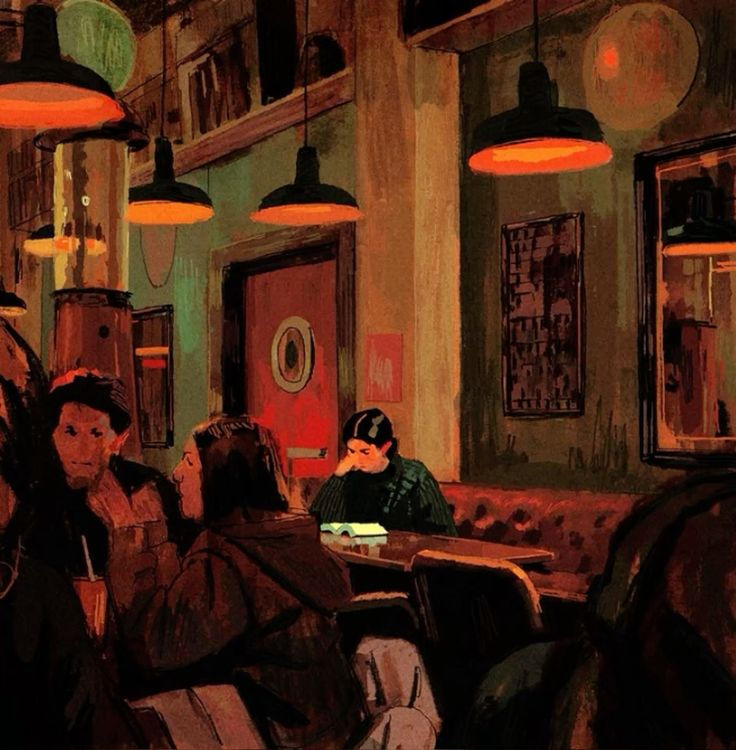
Yesterday, I was reading a book called ‘What You Are Looking for Is in the Library’. I scoffed at the title. Following this logic, all my problems in life should have been solved when I was still 10 years old. But the cover seemed pleasing enough for me to read it. Yes, ladies and gentlemen, I do judge a book by its cover, and I am sure that so do you. In the same way that my non-reader friends judge a book by its number of pages and my not-into-anime friends judge anime due to its country of origin. (Also, kudos to the artist who designed the cover.)

Coincidentally, this book is also originally written in Japanese. I was reading its official English version. I say official, because my copy of the English version of ‘No Longer Human’ seems like a poor attempt at “Google Translation”. May your soul rest in peace, Osamu Dazai!
The book has 5 chapters: each one deals with a person grappling with their problems and entails their internal monologue (albeit a tad too long). In every chapter, a different narrator somehow stumbles into this library where this enigmatic librarian gives them a felted piece and a children's book recommendation which becomes the most life-altering experience of their life.
I was definitely not intrigued by this plot. Any accustomed reader of the genre would tell you that Japanese books and media are infamous for demanding lots of patience and their subtleties are quite often lost upon the common masses. In the same way as the deep philosophical revelations of ‘Days at the Morisaki Bookshop’ were lost upon me. Although, I admit it was a fun read for a fellow bookshop lover. I especially enjoyed the smell of that book.
I am currently at Chapter 3 of this book, and it's safe to say that it did not disappoint me like ‘The Buckingham Murders’. The way it treats its characters with such rawness, and does not shy away from their imperfections, actually forced me to reconsider my initial reservations about the title. I recall how two pages in, I absolutely hated the protagonist from the first chapter and how fifty pages further, I was moved to tears—boy, did that hit home. It is funny how easily we hate and love characters in a book, but then you are faced with the realization that maybe you, yourself are playing such a character in real life.
My favourite part was how it took her a week to make castella and it did not magically happen on the 1st try like our Bollywood movies have taught us. These Bollywood movies happen to be the heart and soul of the Indian diaspora abroad, who still believe that song breaks in a movie are legitimate real-life experiences and that all of India is a big fat wedding. We can't blame them either as weddings and such festivities are all that makes them keep coming back to India.
The book made me appreciate two things: First, the Japanese school system and community centers. You could never find such a well-kept community center with such a library in this country. Second, the realisation that you are not the slave to your circumstances. That you can always work to make yourself happy and so you should do that.
The reminder to never give up because tomorrow will always be good. If not today's tomorrow, then tomorrow's tomorrow will be good. The feeling of 'Hope'. Just the way, Shuzo Matsuoka would say, "Don't be ridiculous! The sun will sink, but it will come back up with fresh determination. Why? Because you are the SUN!"
If you asked me, what is that one thing that this world runs on, I would confidently answer: 'Hope'. And if you asked me, why? I'd say it's because hope is the only thing that wakes us up in the morning. It is hope that things will change when you read the morning newspaper. The hope that I'll live long enough to see India finally develop and Kolkata regain its former glory. The hope that next time, news media outlets will not quote 'Indian-origin' in their headlines for clickbait and successful 'Indians' will take their place. The hope that the next time an Indian acts in a foreign film setting, they will not fake their accent. (I am still talking about you DS Bhamra!) It is the easiest accent to understand, why would you want to fake it?
I am sure someone must have questioned Lee's hope in building Singapore from a stretch of wasteland. Look, what that turned out to be! The same hope that made South Korea the powerhouse it is today and won RCB their second IPL trophy. (Congratulations you guys! Suryavanshi didn't deserve to be eliminated though, poor chap.) Of course, hope alone did not make any of this possible. But it was hope that made their efforts seem worthwhile.
In a similar fashion, I hope that the next time I visit a library, I might find what I had been looking for.



Comments